TACTICAL
How to Get Your First 100 Customers for a Vibe-Coded SaaS Without Ads
AI coding tools made it dramatically easier to ship a SaaS product. A solo founder can now go from idea to working app in days instead of months. That speed is useful, but it creates a new problem: there are far more products than there are distribution muscles.
The real test is no longer "Can you build it?" The real test is "Can you get anyone to care?" If your vibe-coded SaaS is sitting at zero users, the answer is not to buy ads, wait for SEO, or rebuild the landing page for the tenth time. The answer is to do direct, uncomfortable, high-signal customer acquisition until you have proof.
This article is adapted from the core idea in The Solo Entrepreneur's video on getting the first 100 customers for a vibe-coded SaaS: if you built fast, you need to distribute deliberately. Below is a practical version of that playbook for solo founders building AI and SaaS products.
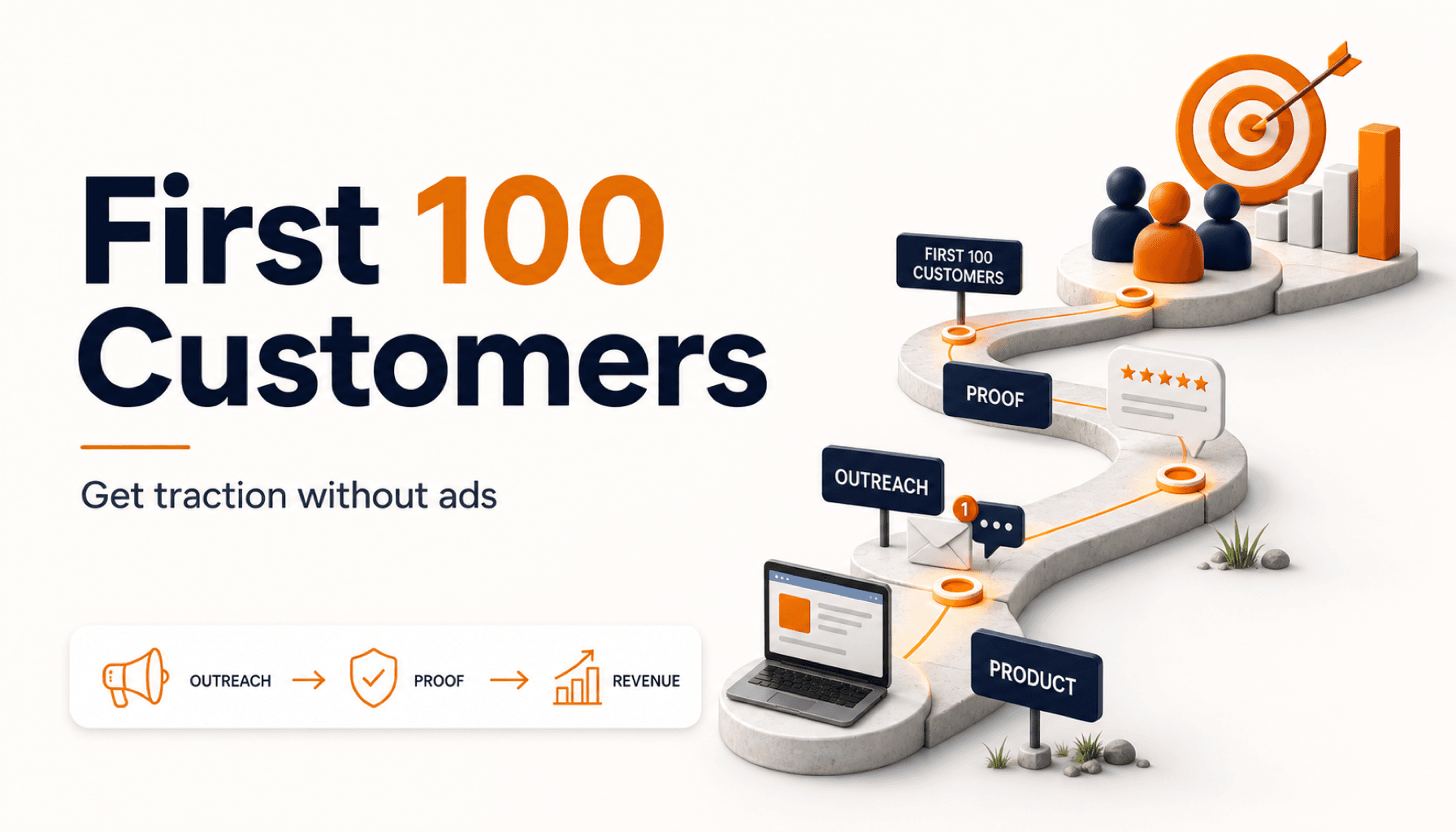
Your first 100 customers do not usually come from scale. They come from proximity: being close to the problem, close to the conversation, and close to the people feeling the pain right now.
Before You Chase 100 Customers, Define the First 10
"Get 100 customers" sounds concrete, but it is still too broad. Your first job is to define the 10 people most likely to buy before the product is polished. Not the total addressable market. Not "small businesses." Not "founders." A real group with a real pain and a place where they already spend time.
For a vibe-coded SaaS, this matters because the product probably came from speed, not a year of customer interviews. The fastest way to avoid months of shallow marketing is to narrow the market until outreach becomes obvious.
Write a one-sentence customer definition before doing anything else:
- Bad: "SaaS founders who need marketing help."
- Better: "Solo B2B SaaS founders who launched an AI tool in the last 30 days and are stuck below 20 signups."
- Best: "Solo B2B SaaS founders posting in Reddit, X, or Indie Hackers about having a product but no repeatable customer acquisition channel."
The best version names the buyer, the situation, the pain, and where you can find them. That is enough to start.
1. Start With Founder-Led Community Replies
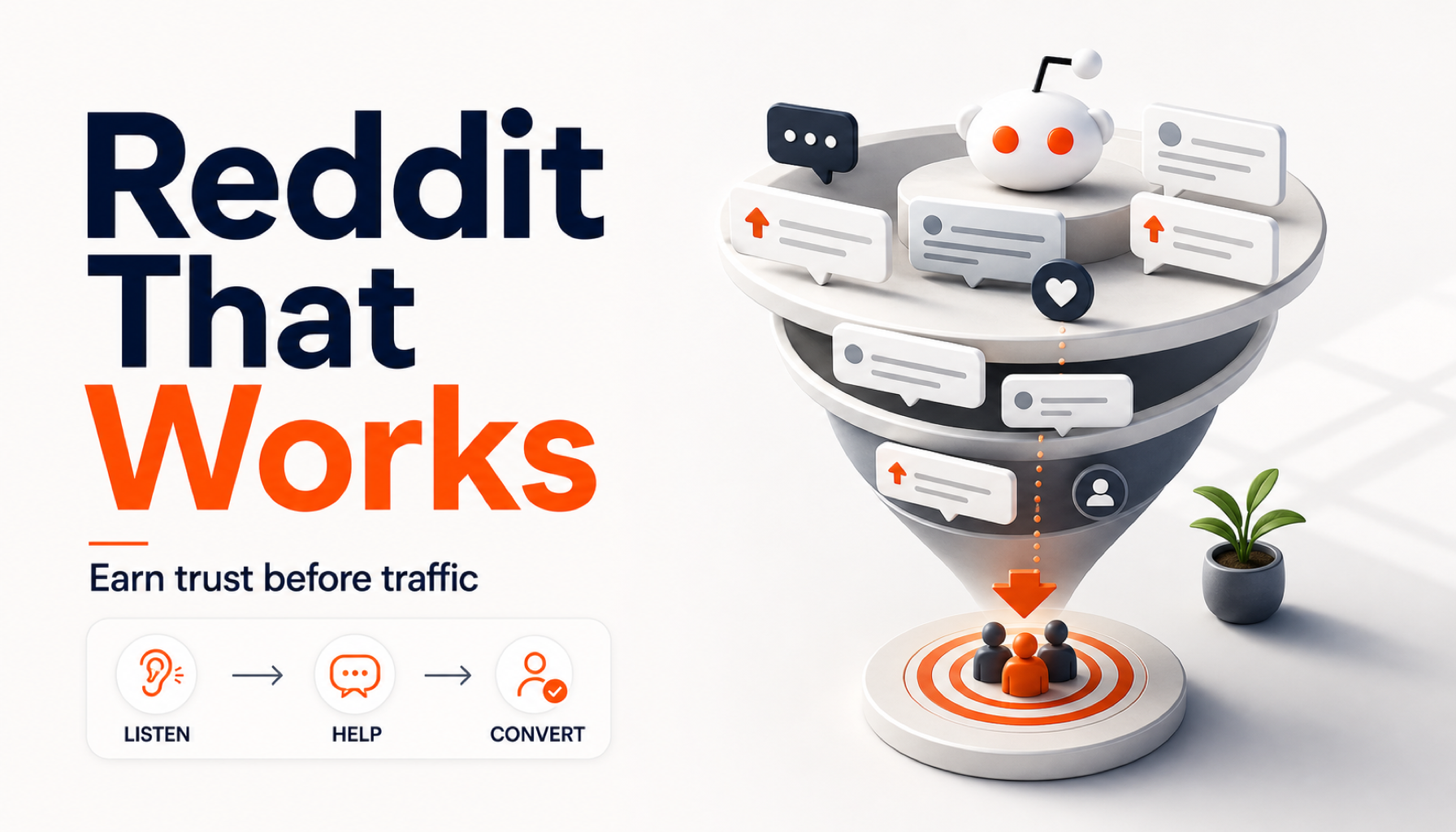
The first customer acquisition channel for most AI SaaS products should not be ads. It should be direct replies in communities where the pain already exists. Reddit, X, LinkedIn, Hacker News, Indie Hackers, Slack groups, Discord servers, and niche forums all work if the conversation is active and specific.
The mistake is entering these spaces with a pitch. Nobody wants a drive-by product drop from a founder who has not read the room. The better move is to answer the problem first and mention the product only when it genuinely fits.
Use this workflow:
- Search for the exact pain your product solves, not broad category terms.
- Open threads where people are asking for help, alternatives, templates, or examples.
- Write a useful answer that would stand on its own even if your product did not exist.
- Add a soft product mention only when it saves the reader time or gives them the next step.
- Track replies, DMs, profile clicks, and signups from each thread.
For example, if your SaaS helps founders generate marketing content, do not search only for "AI marketing tool." Search for phrases like "how do I market my SaaS as a solo founder," "I built an app but no users," "content calendar for SaaS," or "where do I find first customers." Those posts carry buying intent because the pain is already exposed.
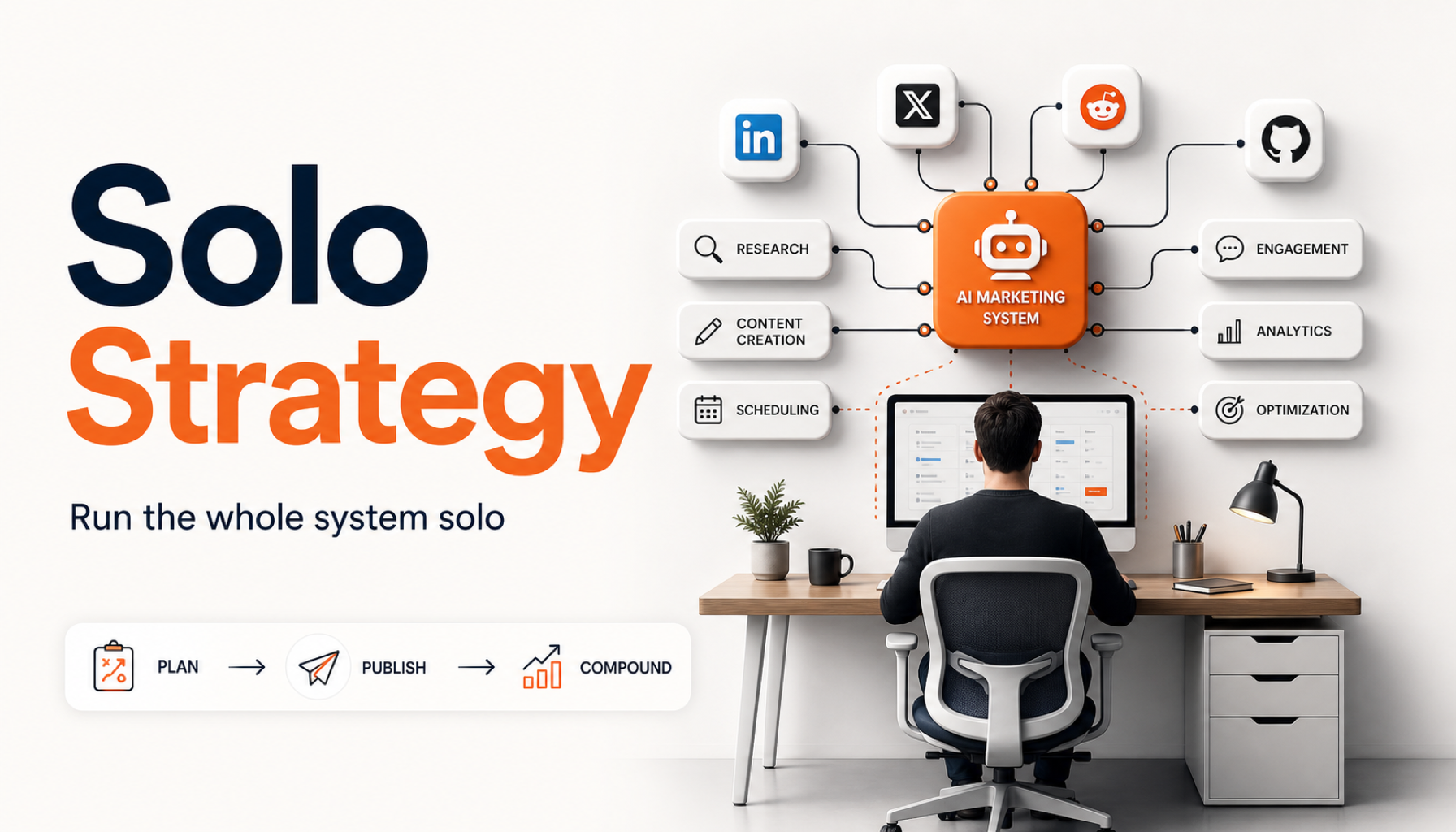
This is also where tools like AICMOHQ can help. Scout agents can monitor Reddit, X, LinkedIn, GitHub, and Hacker News for market signals, then Writer can draft founder-style replies. The founder still approves the response, but the painful part of finding opportunities stops being manual.
2. Turn Every Customer Pain Into a Public Mini-Case Study
Early customers do not buy because your product has every feature. They buy because they recognize their own situation in your explanation. That is why mini-case studies work so well for the first 100 users.
A mini-case study is not a polished success story. It can be a short LinkedIn post, X thread, Reddit reply, or blog section that follows this structure:
- Problem: The specific moment your target customer is stuck.
- Attempt: What they usually try first and why it fails.
- Fix: The workflow or product-assisted process that solves it.
- Result: The concrete before/after, even if it is small.
For a new product, the result might be modest: "replaced a two-hour manual task," "found 12 relevant Reddit threads in 10 minutes," or "drafted the first week of LinkedIn posts from real customer pain." That is enough. Early buyers need proof that you understand the job, not a giant logo wall.
The best part: every support conversation and user onboarding call can become content. If one founder asks, "How do I know what to post about?" there are probably 500 more founders wondering the same thing silently. Answer it publicly. Then link to the product where appropriate.
3. Build a Tiny Free Tool Around the Pain
A free tool can outperform a blog post because it gives the buyer a result before asking for trust. For a vibe-coded SaaS, this is especially powerful: you already have AI coding leverage, so you can ship small utilities quickly.
The free tool should be narrow, fast, and directly connected to the paid product. Do not build a generic calculator that attracts everyone. Build a small wedge that attracts the exact customer you want.
Examples:
- A "first 20 customer ideas" generator for solo SaaS founders.
- A Reddit opportunity scanner for a specific niche.
- A landing page critique tool for AI product launches.
- A cold-start content calendar generator based on product category and ICP.
- A churn-risk checklist for founders selling subscriptions.
The tool should produce an artifact worth saving: a list, score, plan, teardown, prompt pack, or outreach script. Then the product CTA becomes natural: "Want this running every week instead of once? Use the full product."
This is not about lead magnets for their own sake. It is about letting strangers experience the core value before they trust your brand.
4. Borrow Distribution From People Who Already Have Your Audience
If you have no audience, do not pretend you can publish into the void until the algorithm rescues you. Borrow distribution ethically from people, communities, and products that already gather your target customer.
There are several ways to do this without spending on ads:
- Partner posts: Write a practical teardown or workflow for someone else's newsletter, community, or YouTube audience.
- Integration content: Publish useful guides around tools your audience already uses.
- Marketplace listings: Submit to startup directories, AI tool directories, Product Hunt, Betalist, SaaSHub, and niche directories.
- Template swaps: Give another founder a free template or workflow they can share with their audience.
- Expert roundups: Ask five respected operators for one tactical answer, publish the article, and tag them when it goes live.
The rule is simple: bring value to the audience owner before asking for exposure. A strong guest post, teardown, or template helps them look useful to their audience. That makes the distribution ask easier and less transactional.
This channel compounds when you keep a simple partner CRM. Track who owns your audience, what they publish, what you can contribute, and when you last followed up. Your first 100 customers may come from 10 small borrowed-audience wins, not one viral launch.
5. Use Warm Manual Outreach, Not Spam
"No cold calls" does not mean "no outreach." It means you do not need a sales-bro call script to get your first customers. You do need to contact people who have already shown signals of pain.
Warm manual outreach works because the context is already public. Someone posted about the exact problem. Someone commented on a competitor. Someone asked for recommendations. Someone launched a product that clearly has the problem your tool solves. Your message should reference that context directly.
A good early outreach note is short:
Saw your post about struggling to keep up with LinkedIn content after launching your SaaS. I built a small tool that finds relevant conversations and drafts posts from them. Not sure it is a fit yet, but I can run your product through it and send back 5 content angles if useful.
Notice what is missing: no fake flattery, no calendar link, no giant feature list, no pressure. The offer is a small useful artifact. If they want it, you now have permission to continue the conversation.
For the first 100 customers, this kind of outreach is not beneath you. It is the market telling you what copy, positioning, objections, and use cases matter. Paid ads hide that signal behind metrics. Direct outreach gives it to you in plain language.
The First-100 Customer Loop
The five tactics above work best as a loop, not a checklist. Each action should create evidence for the next action:
- Scout: Find public pain in communities, comments, directories, and competitor conversations.
- Reply: Help directly where the conversation is already happening.
- Capture: Turn repeated pains into content, mini-case studies, and free tools.
- Distribute: Borrow audience from partners, directories, and ecosystem content.
- Follow up: Reach out to warm prospects with a useful artifact, not a pitch.
- Learn: Update the product, ICP, offer, and messaging from the responses.
This is the same logic behind autonomous marketing systems. The work is not just publishing. It is sensing the market, turning signals into useful content, engaging with the people who respond, and feeding the learning back into the next cycle.
A 30-Day Plan to Reach Your First Meaningful Users
You probably will not get 100 paying customers in 30 days from a brand-new starting point. But you can build the acquisition machine that makes 100 customers realistic.
Week 1: Narrow the Market
- Define one ICP and one urgent pain.
- Find 50 public conversations where that pain appears.
- Reply helpfully to 10 of them.
- Write down the exact words people use to describe the problem.
Week 2: Publish From Real Pain
- Turn the top three pain patterns into LinkedIn or X posts.
- Create one tactical blog post or teardown.
- Offer five people a free personalized output from your product.
- Collect objections and rewrite your homepage around them.
Week 3: Ship a Free Wedge
- Build one small free tool, checklist, or generator.
- Launch it in the same communities where you found the pain.
- Submit it to relevant directories.
- Add a CTA that connects naturally to the paid product.
Week 4: Borrow Distribution
- Pitch 10 newsletter, community, podcast, or tool owners with a useful contribution.
- Publish one partner-friendly asset: teardown, template, benchmark, or guide.
- Follow up with every warm responder from weeks 1-3.
- Review which channel produced the most qualified conversations, then double down.
At the end of 30 days, you should have a clearer ICP, better copy, real market language, a small audience asset, and a list of warm prospects. That is a much better foundation than a bigger ad budget.
What to Avoid When You Have Zero Customers
Most early SaaS marketing fails because founders copy tactics that only work after there is already demand. Avoid these traps:
- Buying ads before the message is proven: Ads amplify a message. They do not fix a vague one.
- Posting generic AI content: If the post could apply to any product, it will not move your product.
- Launching once and disappearing: Product Hunt is a moment, not a channel.
- Automating spam: Bad outreach at scale burns trust faster than it creates users.
- Serving too many audiences: Early traction comes from sharp relevance, not broad appeal.
The founder who wins the first 100 customers is usually not the loudest. It is the founder who gets closest to the customer and keeps showing up with useful, specific help.
Where AICMOHQ Fits
If you are doing this manually, the work is straightforward but time-consuming: search communities, identify buying signals, write replies, draft content, track engagement, follow up, and learn from performance. That is exactly the loop AICMOHQ is built to run for solo founders.
AICMOHQ gives you an approval-first AI marketing system: Scout finds opportunities, Writer turns them into posts and replies, Publisher handles distribution, Engage monitors responses, Analyst reports what works, and ICP Validator keeps your targeting honest. You stay in control of what goes out, but you stop starting from a blank page every day.
If your vibe-coded SaaS is built but nobody is finding it, your next bottleneck is not engineering. It is customer acquisition. Start close to the market, turn conversations into content, and build the loop before you try to scale it.