TACTICAL
How to Grow to 10K LinkedIn Followers as a Solo Founder Using AI Agents
Most solo founders are bad at LinkedIn — not because they lack ideas, but because consistent execution at the quality level the algorithm rewards is a full-time job. You're already doing the work of four people. You can't also be a content strategist, copywriter, scheduler, and engagement manager. That's the real problem. Not the algorithm, not the niche, not the headline formula. The real problem is bandwidth, and the answer isn't hustle — it's leverage.
I'm going to show you exactly how to get to 10,000 followers in 90 days as a B2B solo founder, using a system that runs largely on autopilot once you've set it up. But first, let's be honest about why LinkedIn is worth your time at all in 2026, when every platform is screaming for attention.
Why LinkedIn Still Beats X and Reddit for B2B Founders
X (formerly Twitter) has the loudest tech founder community, but the monetizable B2B audience — the people who actually buy SaaS tools, hire agencies, and sign contracts — skews heavily LinkedIn. The numbers back this up. LinkedIn's average user income is $75K+. Its ad conversion rates for B2B are 2-3x higher than X. More importantly, organic reach on LinkedIn is not dead. The platform still surfaces posts to second and third-degree connections in a way that X essentially stopped doing years ago unless you pay.
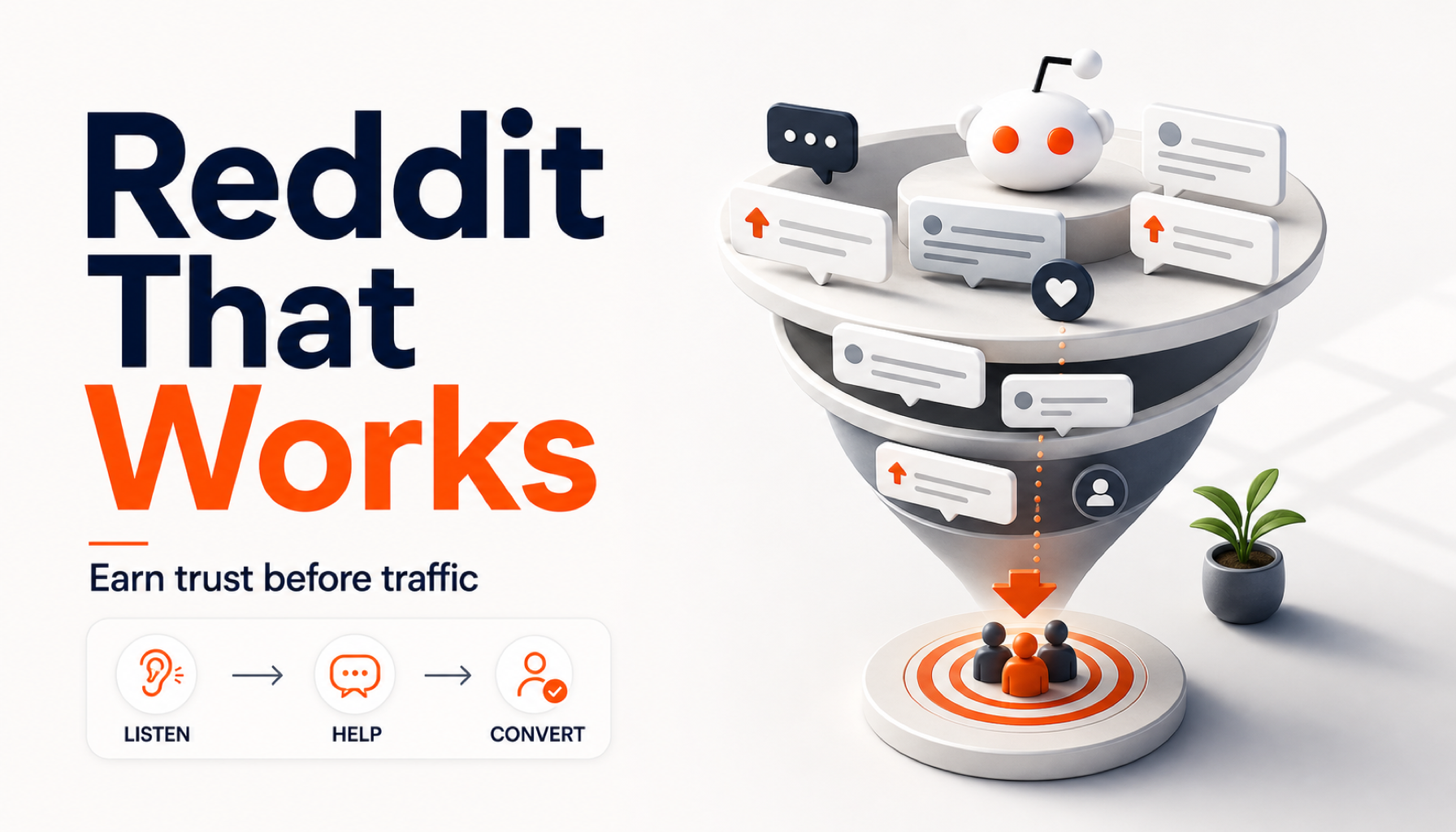
Reddit is excellent for community-driven discovery — your Scout agent should absolutely be mining it for ICP signals — but it's terrible for personal brand building. You can't build a founder identity on Reddit. Anonymity is the culture.
LinkedIn in 2026 has one underappreciated structural advantage: the feed still rewards people, not pages. Company pages get decimated by the algorithm. Personal profiles of real humans sharing real experiences still get punchy organic reach. For a solo founder, that's a organic distribution mechanism that would cost tens of thousands in paid channels to replicate.
The caveat: LinkedIn is merciless about quality. A low-effort post doesn't just underperform — it actively suppresses your future reach. One bad week of content can set your momentum back by three weeks. That asymmetry is why the consistency problem is so acute, and why automation done well changes the math completely.
The Content Types That Actually Grow LinkedIn Fastest
Not all content is equal on LinkedIn. After analyzing thousands of founder posts, three content archetypes dramatically outperform the rest:
Build in Public Updates
Specific, numbered, honest. "We crossed $10K MRR today. Here's what we did in the last 30 days that moved the needle." These posts work because they combine specificity (which the LinkedIn algorithm rewards) with vulnerability (which humans respond to). The mistake founders make is being vague: "Growth is hard but we're making progress." That's useless. The version that goes viral is: "We had 47 trials last month. Only 3 converted. Here are the 5 objections we heard on every lost-deal call."
Lessons Learned (Especially Failures)
Failure posts outperform success posts by about 3:1 on LinkedIn. People are tired of curated success theater. A post that says "I made this mistake and it cost me $12K — don't do what I did" will get more saves, comments, and shares than a humble-brag about a win. Be specific about what went wrong, what you missed, and what you'd change. This is founder-to-founder communication at its best.
Contrarian Takes
These are high-risk, high-reward. "Everyone tells you to post daily on LinkedIn. I tested 3 posts/week vs 7 posts/week for 60 days. The results will make you rethink your entire content calendar." Contrarian posts trigger engagement because they create a pattern interrupt. But they only work if you can back them up. A weak contrarian take that falls apart under scrutiny will destroy your credibility faster than anything else. Only go contrarian when you have the data or the lived experience to defend it.
Two secondary content types worth adding to your rotation: frameworks (people love a step-by-step system — it gets saved) and curated insights from your industry (positions you as a connector of ideas, not just a self-promoter).
The 90-Day Framework: Week by Week
This isn't a vague roadmap. It's a specific system that moves the needle at each stage, calibrated to how LinkedIn's algorithm actually works.
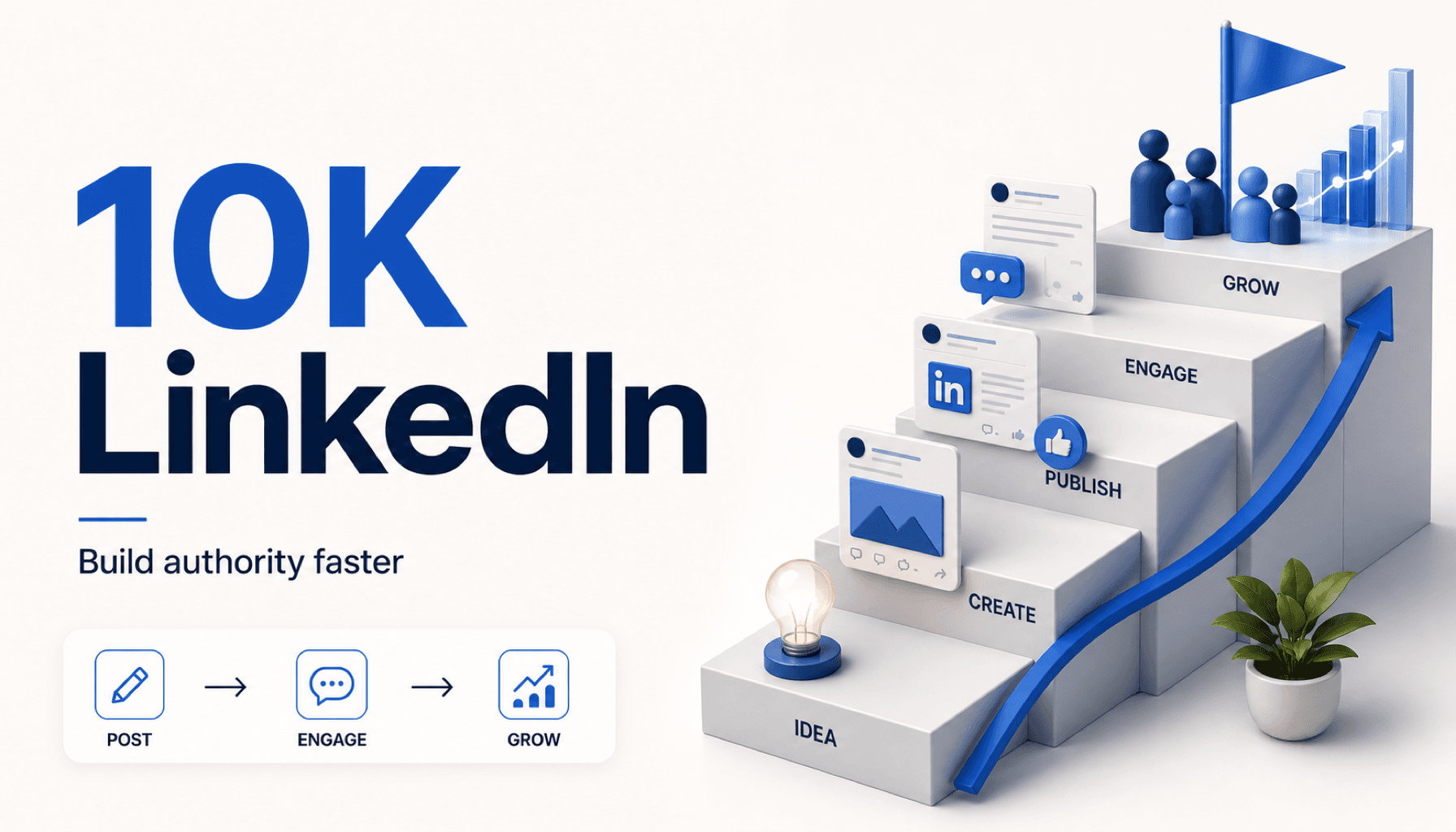
Weeks 1–4: Foundation and Signal
Your goal in the first four weeks is not virality — it's signal. You're teaching the algorithm who you are and who finds you interesting. Post 4x per week. Mix one build-in-public update, one lesson-learned, one opinion/framework, and one engagement-bait question (not "thoughts?" — something specific: "What's your biggest mistake when pricing a B2B SaaS in year one?"). Spend 20 minutes daily commenting on posts from 10–15 accounts in your ICP's world. Not "great post!" — actual contributions that add a new angle or a specific example. In week one, you probably have under 500 followers. That's fine. You're establishing posting rhythm and gathering first-party data on what resonates.
Weeks 5–8: Acceleration
By week five, you'll have two to four posts that significantly outperformed the rest. Double down on those formats. Don't chase novelty yet — you're reinforcing a pattern that the algorithm has started to associate with your profile. Increase posting to 5x per week. Add one long-form document post per week (LinkedIn's document/carousel format still gets 2–3x the impression count of plain text posts). Your engagement rate should be climbing — 3–5% is the target. Below 2% means your content isn't landing with your actual audience; above 5% means you've hit a resonant vein. Mine it aggressively.
Weeks 9–12: Distribution Compound
By week nine, if you've executed weeks one through eight well, you're probably at 3,000–5,000 followers. The final push to 10K requires one thing the first eight weeks couldn't give you: amplification from outside your existing network. This means: getting featured in newsletters, cross-posting content to Reddit and X with LinkedIn as the canonical version, collaborating with one or two peers for duet posts or co-authored frameworks, and — critically — converting your best commenters into active engagers who seed your posts in the first 90 minutes (when LinkedIn decides whether to push a post to wider distribution). At week twelve, a single breakout post can do what three months of steady posting accomplished.
How AI Agents Accelerate the Entire Loop
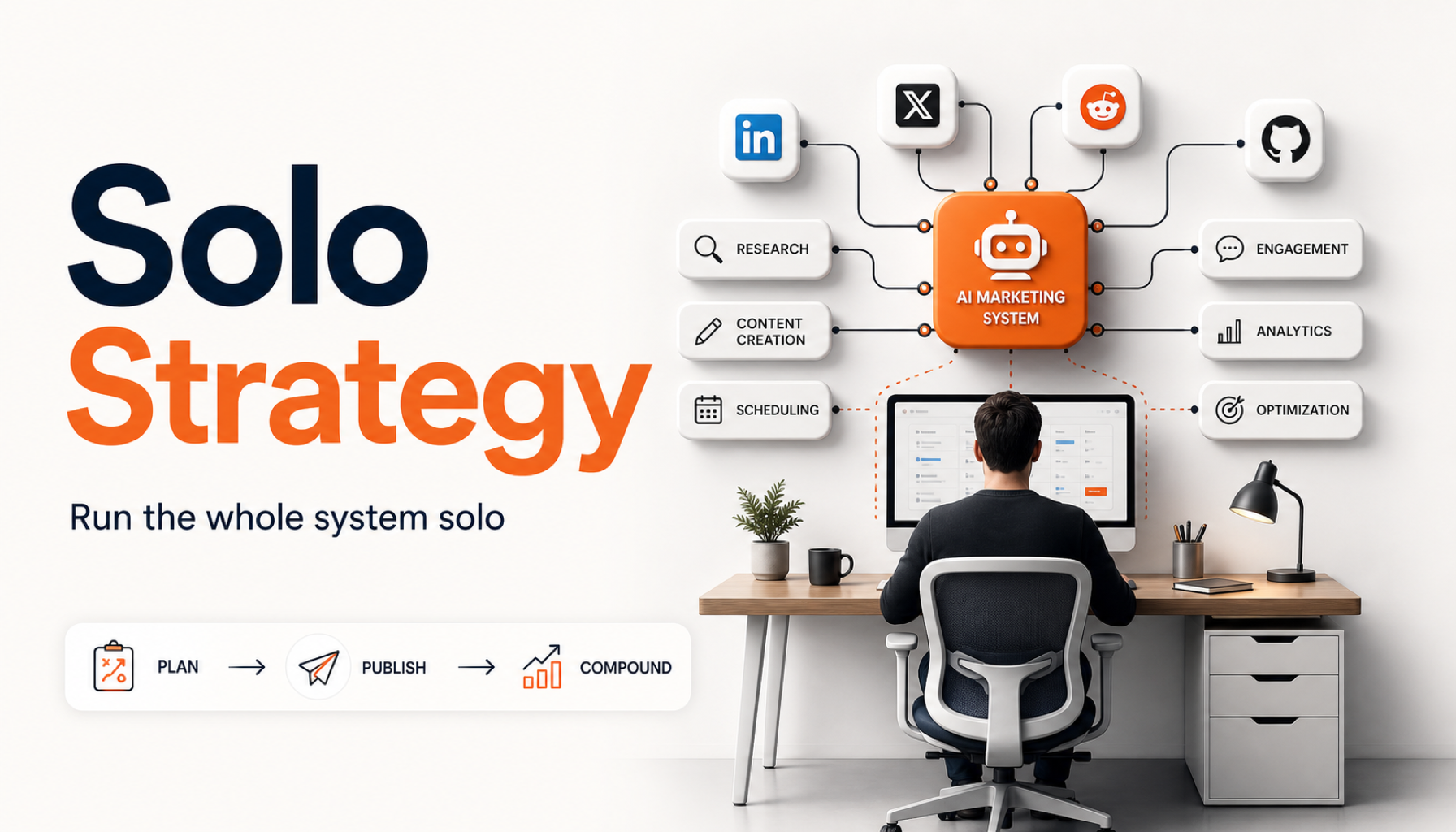
Here's where the math changes. The 90-day framework I just described, executed manually, requires roughly 10–15 hours per week. That's a part-time job. Most solo founders can't sustain that without it cannibalizing the actual product work. AI agents compress that to 2–3 hours of review and approval time, with the heavy lifting handled autonomously.
The loop works like this: Scout scans Reddit, X, LinkedIn, and HN every day for trending topics inside your ICP's conversations — the questions they're asking, the frustrations they're venting, the debates that are pulling engagement. It surfaces the top five opportunities for your review. Writer takes those signals and drafts posts in your voice — not generic LinkedIn content, but copy calibrated to how you actually communicate, based on your prior posts and the voice profile you've set. Publisher schedules those drafts at the optimal posting windows for your audience's timezone and engagement patterns, and queues them for your approval before anything goes live.
The critical piece is approval. You're not handing the wheel to a bot. You're reviewing drafts that are already 80% there and making the 20% edits that make it genuinely yours. That's a five-minute review, not a thirty-minute writing session. At scale, AICMOHQ's pipeline means you could have a week's worth of high-quality LinkedIn content queued by Monday morning, having spent twenty minutes reviewing drafts over the weekend.
The Engagement Trap: Why Posting Alone Never Works
The biggest misconception about LinkedIn growth is that it's a broadcasting problem. Post good content, get followers. That's not how it works. LinkedIn is a conversation platform masquerading as a publishing platform. The accounts that grow fastest are the ones that comment more than they post.
Here's the mechanic: when you leave a substantive comment on a post that subsequently goes viral, your name appears in front of everyone who sees that comment thread. If your comment is good, those people click your profile. If your profile is tight and your recent posts are strong, a percentage follow. This is organic distribution that no posting cadence can replicate.
The rule of thumb: for every post you publish, leave five comments on other people's posts. Target accounts with 5K–50K followers who post in your ICP's world. Don't comment on accounts that are already too big — the comment thread is too crowded and your contribution gets buried. Mid-tier creators have engaged comment sections where your voice can actually stand out.
This is also where AICMOHQ's Engage agent becomes useful. It monitors replies to your posts and flags threads that need a response, surfaces comment opportunities on trending posts from accounts you track, and drafts response options for your approval. You're still the one pressing send — but the cognitive overhead of monitoring and responding is handled.
Using AICMOHQ's LinkedIn Agent: What It Actually Does
Let me be specific about the workflow, because vague AI promises are the fastest way to lose your trust.
When you connect your LinkedIn account to AICMOHQ, the Scout agent begins monitoring your configured topic clusters — ICP pain points, competitor conversations, trending keywords in your space. It runs on a daily cadence and delivers a digest of the top signals it found. You can review these directly in the dashboard.
The Writer agent takes approved signals and drafts LinkedIn posts in three formats: short-form text, carousel/document outlines, and long-form articles. On first setup, you feed it five to ten of your best existing posts so it can calibrate your voice. The voice calibration isn't a one-time thing — it improves every time you approve or edit a draft. Edits you make are fed back as voice training data.
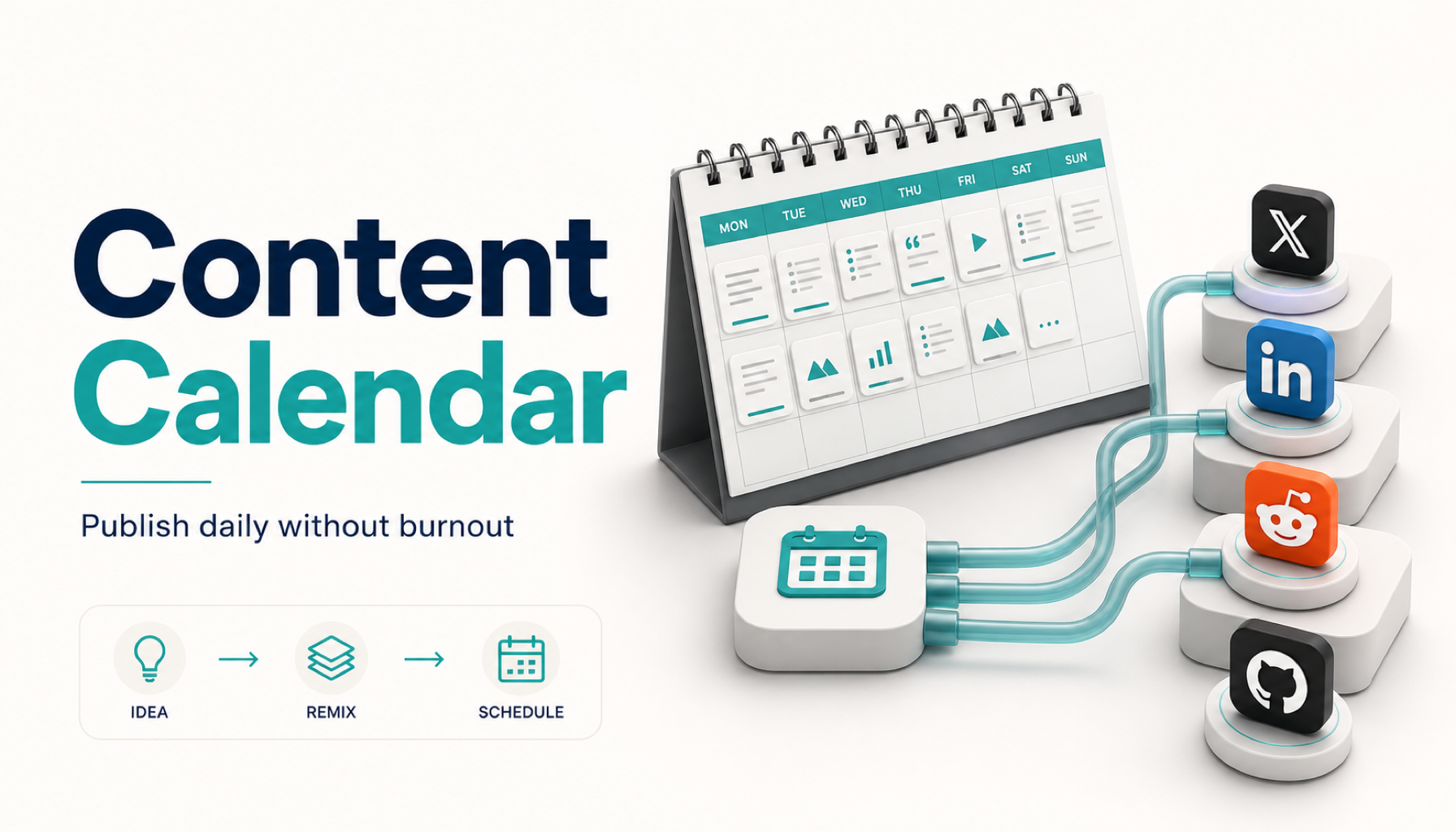
Critically, the default mode is approval-first. Nothing is posted without you seeing it. You can switch to autonomous mode if you trust the system — but for LinkedIn, where a single off-brand post can damage relationships you've spent years building, most founders keep approval mode on. The Publisher agent respects a scheduling window you define (say, Tuesday and Thursday at 8am, Wednesday at noon) and queues drafts into those slots until you approve them.
The practical result: with AICMOHQ running, a typical founder spends about 90 minutes per week on LinkedIn — reviewing drafts, approving posts, responding to flagged comments, and checking the analytics the Analyst agent surfaces. That's the 90-day framework executed on a compressed time budget.
Real Growth Metrics: What 10K Followers Actually Means for B2B SaaS
Let's talk about the business value, because follower count without revenue impact is vanity.
At 10K followers with a 3–4% engagement rate on a B2B SaaS audience, a single post announcing a product launch can generate 2,000–4,000 impressions from your direct network, with second-degree reach pushing that to 15,000–30,000 impressions total. A single high-converting post can drive 200–400 clicks to your landing page.
More importantly, 10K followers on LinkedIn provides three compounding business benefits that go beyond any single post. First, inbound credibility: prospects who Google you will land on your LinkedIn profile before almost anything else. A profile with 10K followers and a consistent post history signals legitimacy in a way that a landing page alone never can. Second, distribution leverage: every piece of content you publish — blog posts, product updates, case studies — now has a built-in distribution channel that you own, that isn't dependent on ad spend or SEO ranking. Third, partnership surface area: other founders, operators, and potential partners use LinkedIn follower count as a rough proxy for reach. At 10K you're in a different conversation tier than at 500.
For a typical B2B SaaS with a $50–200 ACV, converting even 0.5% of monthly impressions into trial signups is meaningful. At 10K followers, that's not a stretch goal — it's a reasonable expectation from a consistent content operation.
Mistakes That Kill LinkedIn Growth
A few patterns I see kill momentum repeatedly:
- Automation that feels robotic. Posting five times a week with generic AI slop — "Here are 5 ways AI can transform your business" — doesn't just underperform, it actively destroys trust. LinkedIn users are increasingly good at detecting AI-generated nothing-content. The test is simple: would a smart person in your ICP read this and think "this person understands my world"? If not, don't post it.
- Ignoring comments on your own posts. You worked hard to earn a comment. Leaving it unanswered is a double loss: you missed a relationship opportunity, and you signaled to the algorithm that the conversation didn't sustain engagement. Reply to every comment in the first two hours.
- Inconsistency spikes. Posting seven times in one week and then going dark for two weeks is worse than posting twice a week every week. The algorithm penalizes inconsistency heavily. Pick a cadence you can sustain and hold it.
- Profile neglect. New visitors who land on your profile decide in about eight seconds whether to follow. If your headline is just your job title, your banner is blank, and your about section is empty, you're bleeding followers who would have converted with thirty minutes of profile work.
- Chasing trending topics outside your lane. If your ICP is DevOps engineers and you post about the latest geopolitical event because it's trending, you confuse the algorithm and alienate your audience simultaneously. Stay in your lane, especially in the first 60 days.
Ready to Automate Your Marketing?
The 90-day framework above works. But executing it manually while building a product is a recipe for burnout. AICMOHQ was built specifically for this problem — giving solo founders the content operation of a full marketing team, running autonomously in the background while you stay focused on the work only you can do. Scout finds the opportunities, Writer drafts in your voice, Publisher schedules to your calendar, and Engage keeps the conversations alive. You stay in control with approval-first defaults, and the system learns your voice over time. Start your AICMOHQ trial — credit card required, with enough time to see the loop in action before the first charge.