AUDIENCE
ICP Validation for Solo Founders: How to Stop Building for the Wrong Customer

You built the product. You launched it. You shared it on Hacker News, tweeted about it, posted in three subreddits. And then — mostly silence. A handful of trial signups, a few kind words, zero paid conversions. The frustrating part isn't the silence itself. It's that you can't tell if the problem is the product, the marketing, the pricing, or something else entirely. More often than founders want to admit, the problem is none of those things. The problem is that you're talking to the wrong person. ICP validation — knowing precisely who you're building for before you scale anything — is the unglamorous prerequisite that separates founders who find traction from founders who keep grinding.
Why Most Founders Get ICP Wrong (It's Almost Always Too Broad)
The classic ICP mistake is defining your customer by job title and company size, then calling it done. "B2B SaaS companies with 10–200 employees." That's not an ICP. That's a market segment the size of a continent.
Broadness feels safe. If you narrow too far, you're worried you'll exclude customers who might convert. But the opposite is true: a narrow ICP sharpens your messaging so much that the right people instantly feel like you're reading their mind. Broad ICPs produce copy that resonates with no one because it's optimized to offend no one.
The second mistake is confusing interest with intent. Someone who upvotes your Product Hunt post is not your ICP. Someone who emails you unsolicited asking "when can I pay for this?" might be. Interest is cheap. Intent to pay is the only signal that matters when you're validating.
The third mistake is building the ICP from internal assumptions. You list the demographic traits of the person you imagine using your product, not the traits of people who have actually used it, paid for it, and stayed. These two lists rarely match perfectly, and the delta between them is where founders lose months.
A useful mental model: your ICP is a hypothesis, not a fact. You form it, you test it, you revise it. The revision cadence should be faster than you think — especially in the first 12 months.
The Three Signals of a Validated ICP: They Pay, They Stay, They Refer
If you want a simple framework to decide whether your ICP hypothesis has been validated, ignore every metric that doesn't involve money or behavior. There are exactly three signals that count.
They pay
A validated ICP segment pays without requiring heroic sales effort. If you're spending two hours on a call convincing someone that your product is worth $29/month, they're probably not your ICP. Your ICP sees the price, understands the value immediately, and converts. Friction in conversion is a signal that either the messaging is off for that segment, or the segment itself is wrong.
They stay
Retention is a stronger signal than acquisition. If a customer churns after 30 days, the product failed to deliver on its promise for that specific person — which tells you something real about fit. Track churn by cohort and by persona. If one persona churns at 40% and another at 8%, you've found a signal. The 8% persona is closer to your real ICP.
They refer
Referral is the strongest signal of all. When a customer tells a peer about your product unprompted, they're staking their social capital on it. They only do this when the product has solved a real, painful, well-defined problem — the kind of problem your ICP has. Track where your best customers come from. A meaningful share coming from word-of-mouth within a specific community is strong ICP confirmation.
"You don't need 100 data points to validate an ICP. You need 5 customers who pay, stay, and refer — and then you need to understand exactly why."
How to Find Your ICP Using Reddit and Social Listening
Before you write a single survey or book a single customer call, do the listening first. The internet has already done your qualitative research for you — you just need to read it correctly.
Reddit is the most underrated ICP research tool for solo founders. The reason is self-selection: people who post in niche subreddits are, by definition, engaged with a specific topic. They're not a random sample. They're the kind of people who care enough to write a paragraph about their problem on a Saturday afternoon. That's your audience.
Here's the actual process:
- Find 3–5 subreddits where your target persona congregates. Don't start with the obvious ones. If you're building for solo founders, start with r/SaaS, r/indiehackers, r/EntrepreneurRideAlong. But also look at adjacent communities where the problem surfaces — r/freelance, r/consulting, niche industry subreddits.
- Search for pain language, not feature language. Search for terms like "frustrated with," "struggle to," "can't figure out," "does anyone else," "I keep failing at." These phrases surface authentic problem articulation, not polished feature requests.
- Read the upvotes, not just the posts. A post with 400 upvotes about a specific pain is telling you that 400 people in that community recognize that pain as real. That's a sample size.
- Note the language patterns. How do these people describe their problem? The exact words they use are the words that should appear in your landing page copy. This is not optional — it's the fastest path to resonant messaging.
This is exactly the kind of signal that AICMOHQ's Scout agent is designed to surface at scale. Rather than manually trawling subreddits every morning, Scout monitors Reddit (and X and LinkedIn) for the specific pain signals relevant to your product, so you're always working from current data rather than a six-month-old spreadsheet.
The ICP Interview Method: 5 Questions That Reveal Willingness to Pay
Social listening tells you what the problem is. Interviews tell you whether someone will pay to have it solved. These are different things, and conflating them is a mistake.
Most founder interviews fail because they're designed to confirm, not discover. You go in hoping the person will say "yes, this is a problem, yes I would pay." You ask leading questions. You get polite agreement that means nothing. Here's a tighter interview frame built around five questions that actually separate signal from noise.
Question 1: "Walk me through the last time this problem cost you something."
Not "does this problem exist?" — that's too easy to say yes to. Make them narrate a specific instance. If they can't produce one, the problem isn't salient enough. If they produce a vivid, detailed story with a real cost (money, time, embarrassment, missed opportunity), you have something.
Question 2: "What have you tried? Why didn't it work?"
This reveals whether they've already tried to solve it — which is a strong signal of intent. It also reveals the gap your product needs to fill. If they say "I've tried nothing," they're probably tolerating the problem rather than actively seeking a fix.
Question 3: "How much did that cost you?"
Quantify. Push them on it. "About a week of wasted time" — what's a week of their time worth? Get a number. This is the foundation of your pricing conversation and the upper bound of what your solution is worth to them.
Question 4: "If a solution existed tomorrow, would you pay for it today?"
The conditional framing matters. "Would you pay" without urgency gets polite yes answers. "Would you pay today" filters for actual urgency. Even better: "Would you pay $X today?" Name a number. Their reaction — not their answer — tells you everything.
Question 5: "Who else in your world has this problem?"
This tests referrability before you've even shipped. If they can immediately name three people, you have a community. If they say "I'm not sure, maybe some people," the problem may be more niche than you thought — or this person isn't actually in your ICP.
ICP Anti-Patterns That Kill Solo Founders
Knowing what to look for is half the job. Knowing what traps to avoid is the other half.
Building for yourself
This is the most seductive trap. You have the problem, so you build the solution, and you assume people like you also have it. Sometimes this is true. But "people like me" is a dangerously underdefined ICP. Your specific combination of skills, context, budget, and tolerance for complexity is not as common as you think. Validate it externally before assuming it generalizes.
Building for enterprise too early
Enterprise has money, but enterprise also has procurement cycles, security reviews, and committee decisions. As a solo founder, you cannot win enterprise deals in your first year without either prior enterprise relationships or a very specific wedge. An ICP that requires a $20,000 ACV and a 6-month sales cycle will bankrupt you before you ever reach product-market fit. Start with buyers who can decide in a day.
Building for everyone
This is the broadness problem stated differently. "Anyone who needs better marketing" is not an ICP. The pressure to include more segments comes from a fear of leaving money on the table. But a diffuse ICP produces diffuse messaging, and diffuse messaging produces poor conversion, and poor conversion means you actually do leave money on the table. Narrow first. Broaden later, once you have leverage.
The fastest path to wide distribution is a fanatically specific early audience. They become your evangelists, your case studies, and your proof that the product works.
How AICMOHQ's ICP Validator Agent Works
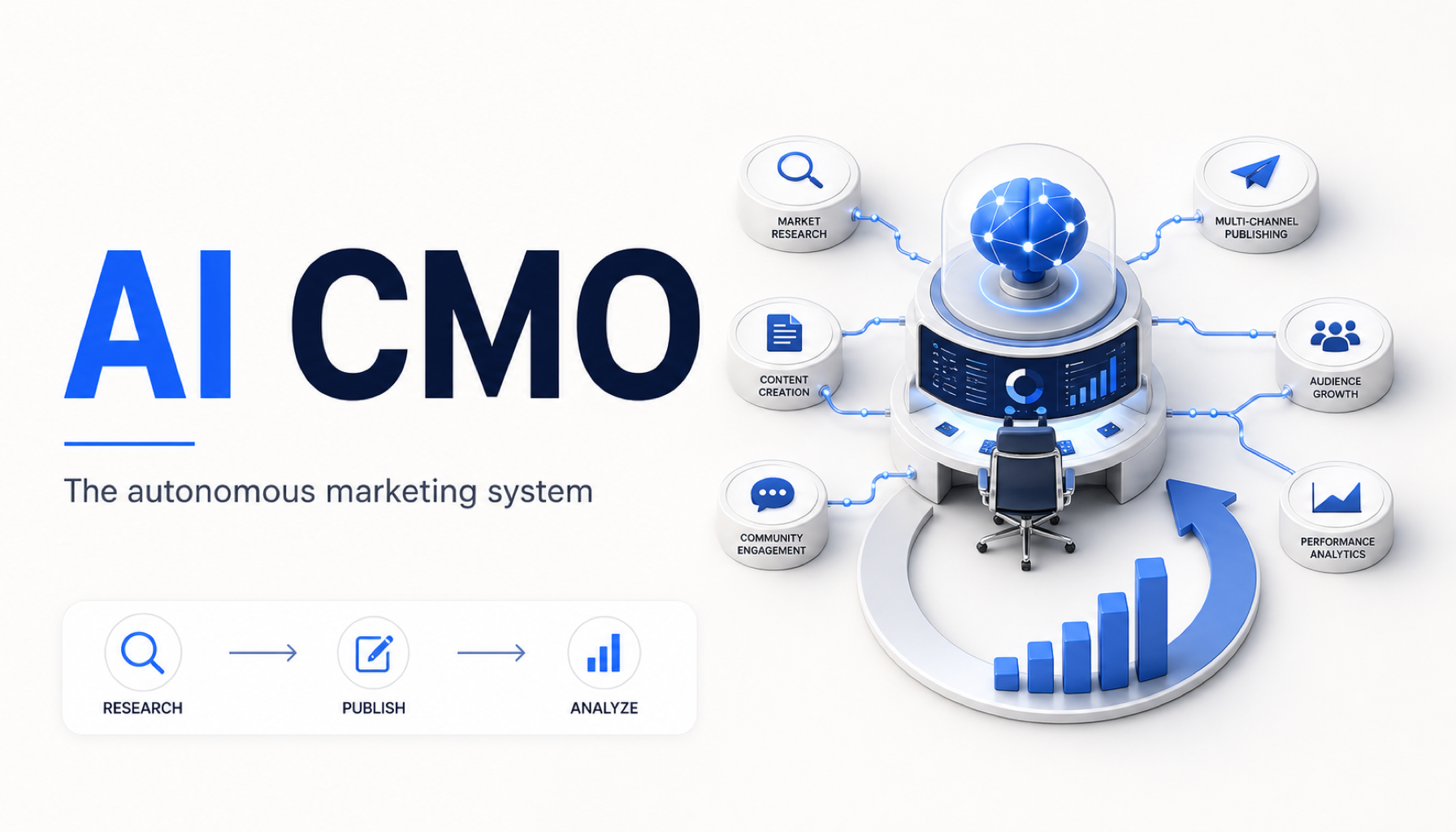
Manual ICP validation takes weeks. You research, interview, compile notes, look for patterns. AICMOHQ's ICP Validator agent compresses that process significantly by doing the pattern-matching work on live social data so you can spend your time interpreting insights rather than collecting them.
Here's what it actually does under the hood:
Data inputs: The ICP Validator pulls from your connected platforms — Reddit threads and comment chains, X conversations and replies, LinkedIn engagement data, GitHub stars and discussions if your product is developer-adjacent. It's not scraping randomly; it's looking at signal relevant to the keywords and problem domains you define.
What it looks for: The agent identifies recurring pain phrases, measures the density of a problem topic within a community, and flags accounts and personas that exhibit high-intent behavior — repeated posts about the same problem, engagement with solution-adjacent content, explicit statements of budget or urgency.
What it outputs: A structured ICP profile: the platform where your audience is most active, the language patterns they use, the adjacent problems they discuss, the competing solutions they've already tried, and a confidence score based on volume and specificity of signal. This is a hypothesis document, not a guarantee — but it's an evidence-backed hypothesis you can act on immediately.
The key difference from manual research isn't just speed. It's that the ICP Validator runs continuously, so when market language shifts — when a new pain emerges or an old one becomes less salient — you find out within days, not quarters.
Updating Your ICP as Your Product Evolves
Your ICP at launch is not your ICP at $10K MRR. This is a feature, not a bug. Products evolve, markets shift, and early adopters are rarely the same persona as your growth-stage customers. The mistake is treating your ICP as a fixed document rather than a living hypothesis.
Set a quarterly ICP review cadence. In each review, ask:
- Who are our top 10 paying customers by revenue or NPS? What do they have in common?
- Who churned in the last quarter? What did they have in common?
- Have any new use cases emerged that we didn't design for?
- Is the pain language shifting in the communities we monitor?
Pay special attention to expansion revenue. If customers are upgrading, buying more, or asking for features that push the product in a new direction, that's a signal that the ICP is evolving. Follow it.
ICP drift is also real: you can gradually attract a customer type that's slightly different from your original ICP, and not notice until the product roadmap starts pulling in contradictory directions. A quarterly review prevents that drift from compounding silently.
Translating ICP Clarity into Marketing Copy That Converts
All of this research is worthless if it doesn't change how you write. The whole point of ICP validation is that you now know exactly what your customer is afraid of, what they've already tried, what they wish existed, and what words they use to describe their problem. That's your copy brief.
Concrete translation rules:
Use their language, not yours. If your ICP describes their problem as "wasting hours on content that goes nowhere," that phrase should appear in your hero section — not a polished marketing rewrite of it. Authenticity is recognized.
Name the pain before you name the solution. Your headline should describe the problem state your ICP is living in right now. The subhead can introduce your solution. If you lead with the solution, you've skipped the moment of recognition that makes someone read the next sentence.
Specificity converts better than breadth. "For solo founders who post on LinkedIn but get zero pipeline" converts better than "for founders who want more leads." The narrower statement makes your ICP feel like you wrote the copy specifically for them — because you did.
Social proof should match the ICP. Your testimonials should come from people who look like your ICP. A quote from an enterprise VP does nothing for a solo founder audience. A quote from someone in month two of running their SaaS alone, describing a specific result — that lands.
When you combine ICP clarity with a tool like AICMOHQ's Writer agent — which drafts in your voice across platforms — you get marketing that's both authentic and consistent. The Writer agent works best when it has a clear ICP to write for: a defined persona, a defined pain point, a defined platform tone. ICP validation is what makes AI-generated content feel human.
Ready to Automate Your Marketing?
ICP validation is the highest-leverage thing a solo founder can do before touching marketing automation. Once you know exactly who you're talking to, what they care about, and what language they use — automation stops being noise-at-scale and starts being signal-at-scale. AICMOHQ is built for exactly this: six agents that research your market, draft in your voice, publish on schedule, and track what works — so you can spend your time on the work only you can do. Start your AICMOHQ trial and run your first ICP analysis today.